# The Complete Guide to Formaldehyde-Free Brazilian Hair Treatments (2026)
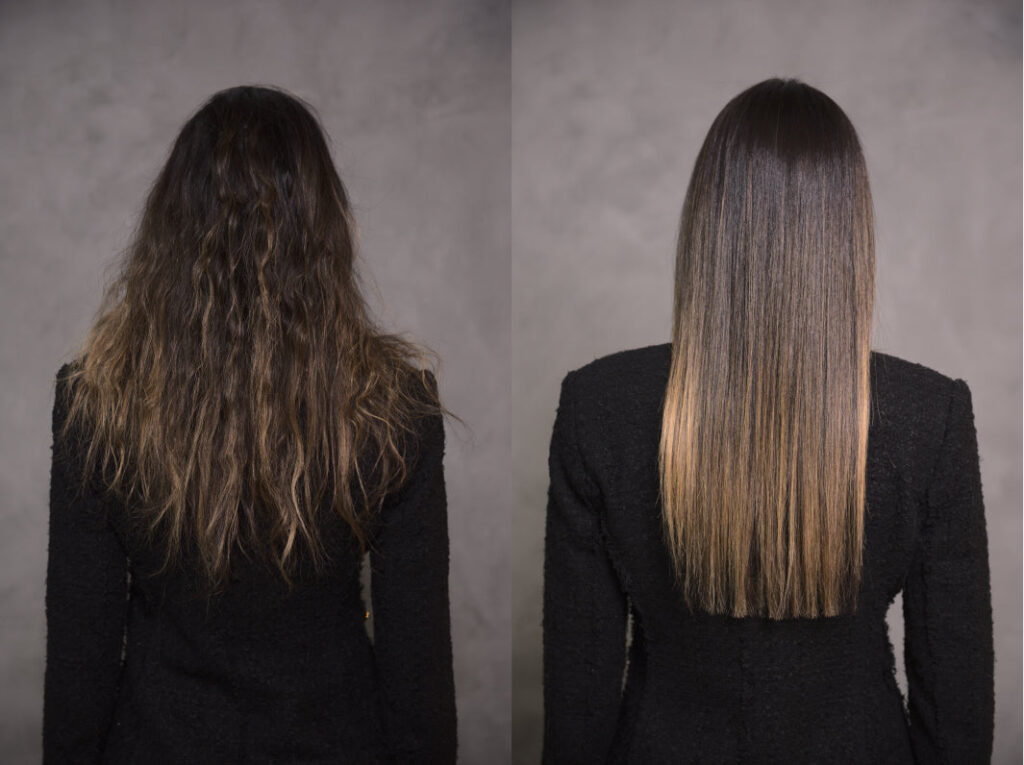
If you've been searching for smooth, frizz-free hair without the toxic fumes of traditional keratin treatments, you're in the right place. Brazilian hair care has quietly been ahead of the curve on this — formaldehyde-free formulas have been standard in professional Brazilian salons for years. Here's everything you need to know about the treatments that actually work, how they differ, and how to choose the right one for your hair.
Quick Answer
- Traditional keratin treatments often contain formaldehyde or formaldehyde-releasing chemicals — known irritants linked to cancer risk by the NIH
- The FDA has been proposing a ban on these chemicals since 2023, but has missed its deadline five times (most recently in December 2025)
- Brazilian hair care has a long tradition of formaldehyde-free alternatives that deliver similar or better results
- The four main types are: Hair Botox, Bioplastia, Cronograma Capilar, and Tannin-based treatments
- Most are safe enough for at-home use with the right product and technique
- Results typically last 2 to 5 months depending on hair type and aftercare
Why This Matters Right Now
Since 2023, the FDA has been preparing a rule that would ban formaldehyde and formaldehyde-releasing chemicals in hair smoothing products. Five missed deadlines later — including a December 2025 target that passed with no action — the rule is still "in the works" with no firm timeline.
Why? Because regulation is slow, and there's no legal penalty for the FDA missing its own deadlines. Meanwhile, research from the National Institutes of Health has shown that women who frequently use chemical hair straighteners have roughly 2.5 times the risk of developing uterine cancer compared to those who don't.
The takeaway is simple: you don't need to wait for the government to act. Formaldehyde-free alternatives already exist, they work, and they've been refined for decades in the country that invented modern smoothing treatments — Brazil.
Why Brazilian Hair Treatments Are Different
A few cultural and technical reasons make Brazilian-formulated products uniquely suited for this.
Brazil's climate drove innovation. High humidity makes frizz a daily reality for millions of women, which created a massive market for anti-frizz solutions decades before the rest of the world caught up. The result is a mature professional product category with intense competition — and that competition pushed formulas toward safer, more effective chemistry.
ANVISA regulations are stricter than the FDA's. Brazil's national health agency banned formaldehyde in cosmetic smoothing products above certain concentrations back in 2009, well before the US began considering the same action. This forced Brazilian manufacturers to innovate with alternative active ingredients much earlier.
Brazilian formulations emphasize hair health over aggressive straightening. The dominant approach is "smoothing" (relaxing curl patterns, reducing frizz, adding shine) rather than "straightening" (breaking and reforming bonds to make hair permanently straight). This philosophy uses gentler chemistry and preserves hair integrity.
For a deeper look at how Brazilian keratin systems set the global standard, read our guide on why Brazilian keratin treatments lead the salon industry.
The 4 Types of Formaldehyde-Free Brazilian Treatments
Here's where most guides get it wrong — they lump everything together as "Brazilian keratin." In reality, there are four distinct categories, each designed for different goals.
1. Hair Botox (Botox Capilar)
What it is: A deep-conditioning treatment that restores moisture, repairs damage, and reduces frizz — without significantly straightening the hair.
How it works: A thick, cream-based mask enriched with proteins, amino acids, and natural oils penetrates the hair shaft to rebuild its internal structure. Applied to damp hair, processed with heat, then rinsed out after 30-60 minutes.
Best for:
- Damaged or chemically treated hair that needs repair
- Curly or wavy hair that you want to keep bouncy but controlled
- Anyone who wants frizz control without changing their natural texture
Duration: 8-12 weeks with proper aftercare
Important: Despite the name, it has nothing to do with botulinum toxin. "Botox" here is a branding term that describes the wrinkle-smoothing effect on damaged hair fibers.
For Brazilian hair botox at home, we recommend our anti-yellow hair botox treatment — particularly suited for blonde or lightened hair that needs repair and brassiness control in the same session.
2. Bioplastia Capilar
What it is: A hybrid treatment that combines the conditioning power of hair botox with light smoothing effects.
How it works: Uses a blend of keratin, amino acids, and natural resins (often derived from coconut, argan, or cocoa butter) to coat the hair and seal the cuticle. The formula is activated with heat from a flat iron, which aligns the hair structure.
Best for:
- Wavy to moderately curly hair
- Hair that needs both repair and smoothing
- Color-treated hair (most bioplastia formulas are gentle enough to use alongside color)
Duration: 3-4 months
Our coffee-infused bioplastia treatment is a strong starting point if your hair needs both deep repair and smoothing in a single application.
3. Cronograma Capilar (Hair Schedule)
What it is: Not a single treatment, but a multi-step at-home protocol alternating three product types: hydration, nutrition, and reconstruction.
How it works: You rotate weekly or bi-weekly between:
- Hydration masks (water-based, add moisture)
- Nutrition masks (oil-based, seal moisture and add shine)
- Reconstruction masks (protein-based, rebuild damaged fibers)
This is maintenance care rather than a one-time smoothing treatment. It's how Brazilian women keep hair healthy year-round without needing aggressive salon services.
Best for:
- Anyone maintaining previously treated hair
- People who want consistent results without a major salon procedure
- Curly hair that needs routine care
Duration: Ongoing protocol — results build over 4-6 weeks of consistent use
4. Tannin-Based Treatments
What it is: A smoothing treatment that uses tannic acid derived from plants (often acacia, oak, or chestnut) instead of formaldehyde to seal the hair cuticle.
How it works: Tannins naturally bind to keratin in the hair, creating a smoothing film that resists humidity. Applied section by section, then sealed with a flat iron at moderate heat (around 350°F, lower than formaldehyde-based treatments require).
Best for:
- Fine to medium hair that needs smoothing without weight
- Color-treated or lightened hair (tannins actually enhance color vibrancy)
- Anyone with sensitivity to chemical fumes
Duration: 2-3 months
Comparison Table
| Treatment | Main Effect | Hair Type | Duration | At-Home Friendly |
|---|---|---|---|---|
| Hair Botox | Deep conditioning, frizz control | Damaged, curly, chemically treated | 8-12 weeks | Yes |
| Bioplastia | Conditioning + light smoothing | Wavy to curly | 3-4 months | With care |
| Cronograma | Ongoing maintenance | All types | Continuous | Yes — designed for it |
| Tannin-Based | Smoothing, frizz resistance | Fine to medium | 2-3 months | Yes |
If you’re trying to choose between hair botox and a keratin treatment specifically, our salon pro’s guide to hair botox vs keratin breaks down which one fits which hair type.
At-Home vs Professional Application
One of the biggest questions we get is whether these treatments are safe to do at home. The honest answer is: it depends on the treatment and your comfort level.
Generally safe at home:
- Hair Botox — low risk, forgiving application, no harsh chemicals
- Cronograma Capilar — designed specifically for at-home routine care
- Tannin-based treatments — safe with a flat iron and a bit of practice
Better done professionally (at least the first time):
- Bioplastia — sectioning technique and heat control matter for results
- Any treatment on very damaged or over-processed hair — a professional can assess whether your hair can tolerate the process
The good news: unlike formaldehyde-based treatments, none of these produce toxic fumes that require salon ventilation. You can safely apply them in your bathroom with a fan running.
How to Choose for Your Hair Type
If your hair is dry, damaged, or over-processed: Start with Hair Botox. Repair first, smooth later. For severely damaged hair, our deep-repair mask works well as a pre-treatment before either step.
If your hair is curly and you want to keep the curl pattern but reduce frizz: Hair Botox or Bioplastia (light application).
If your hair is wavy and you want to smooth to nearly straight: Bioplastia with flat iron sealing — or step up to our professional keratin smoothing system for stronger, longer-lasting results.
If your hair is fine and you're scared of weighing it down: Tannin-based treatments.
If you just want to maintain healthy hair long-term: Cronograma Capilar as a weekly routine.
If you have color-treated hair: All four options are safe. Tannin treatments are actually color-enhancing.
Common Questions
Are formaldehyde-free treatments as effective as traditional keratin?
For smoothing and frizz control — yes, and often better for hair health in the long run. For dramatic straightening of very coarse or tightly coiled hair, traditional formaldehyde-based treatments still deliver the most extreme results, but at a real cost to your health and your hair's integrity.
How do I know if a product is really formaldehyde-free?
Read the ingredient list carefully. Watch for these red flags, which all release formaldehyde when heated:
- Methylene glycol
- Formalin
- Formic aldehyde
- Methanediol
- Glyoxylic acid (a newer controversial one — safer than formaldehyde but still a sensitizer for some people)
Legitimate formaldehyde-free products list their active ingredients openly: amino acids, keratin, natural oils, tannins, botanicals.
Can I do a treatment if I have highlights or balayage?
Yes, with all four types. Formaldehyde-free formulations are gentler on color than traditional keratin treatments. Tannin-based treatments can actually deepen and enhance color vibrancy.
How much should I expect to spend?
- At-home products range from $30 to $120 depending on size and formulation
- Salon treatments in the US typically run $200-$500 depending on location and hair length
- Cronograma protocol is ongoing — budget $50-$100 every 2-3 months for a rotation of three masks
How often should I repeat the treatment?
- Hair Botox: every 2-3 months
- Bioplastia: every 3-4 months
- Tannin-based: every 2-3 months
- Cronograma: continuous, with 1-2 applications per week depending on hair needs
Do these work on all ethnicities and hair textures?
Yes, but effectiveness varies. All four types work well on Caucasian, Hispanic, Latin, and mixed-texture hair. For very tightly coiled or type 4 hair, results will be smoothing rather than straightening — natural texture is preserved, which many people prefer. Traditional formaldehyde-based relaxers were more aggressive precisely because they chemically altered the hair bond structure; the gentler Brazilian approach doesn't go that far.
Our Recommendations
For readers who want to try Brazilian formaldehyde-free treatments at home, here are the categories we stock — all professional-grade, all formaldehyde-free, all imported directly from Brazil.
For Hair Botox (damaged or curly hair): We carry professional-size options in 1kg salon containers and 300ml trial sizes, both in our specialized curly hair and anti-yellow formulations. Best for deep conditioning without permanent texture change.
For Bioplastia (wavy to curly, wants mild smoothing): Our bioplastic line includes coffee-based (strengthening) and coconut-based (hydrating) formulations. Ideal for first-time users who want visible smoothing without commitment to straightening.
For Cronograma (ongoing care): Our shampoo, conditioner, and mask sets are formulated in matched protocols — hydration, nutrition, and reconstruction triads so you can build a weekly routine without guesswork.
For Tannin-based treatments: Our tannin smoothing line works on finer hair and is specifically gentle enough for color-treated strands.
For the full at-home routine, our complete care home kit bundles a clarifying shampoo, intensive treatment, reconstruction mask, and finishing defrizzer — the same protocol used in salon services. Or browse the full professional Brazilian hair care collection.
The Bottom Line
You don't need to wait for the FDA to finalize a ban to switch to safer hair smoothing. Brazilian hair care has been solving this problem for over a decade, and the formulations available today deliver professional results without the health risks.
The key is choosing the right type for your hair goals:
- Repair first if damaged
- Light smoothing if wavy
- Maintenance routine for long-term health
- Tannin-based for fine or color-treated hair
Whichever you choose, skip the formaldehyde. Your hair — and your lungs — will thank you.